
Have you been told your leg pain and swelling are just weight-related—or worse, that it’s “all in your head”? Lipedema is a real, chronic condition that affects millions of women, often going undiagnosed or misunderstood for years. It causes painful fat buildup, swelling, and sensitivity that can interfere with your mobility, self-esteem, and daily life. Even with proper diet and exercise, lipedema rarely improves on its own.
At Lipedema MD, we take your concerns seriously. Led by board-certified plastic surgeons Dr. Boris Volshteyn and Dr. Rudolf Thompson, our team offers comprehensive diagnostic evaluations and treatment options designed specifically for people living with lipedema. You’ll find the clinical expertise, compassion, and personalized care you deserve, right here in West Long Branch and Eatontown.
What Is Lipedema?
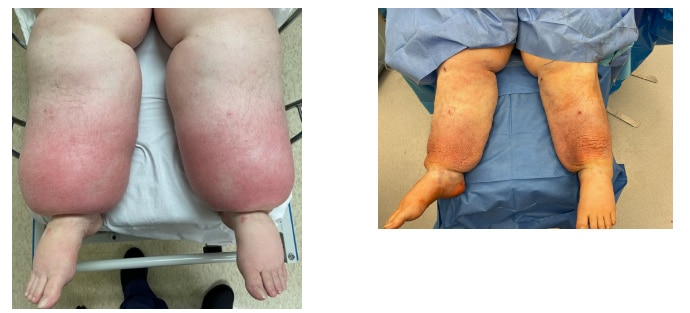
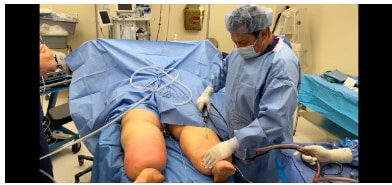
Power assisted, Water Assisted Liposuction combination treatment of legs below knees
immediate after surgery, no skin excision, 20L removed
Lipedema is a chronic, progressive condition that primarily affects women and is characterized by abnormal fat accumulation, most commonly in the lower half of the body. This fat is resistant to diet, exercise, and even bariatric surgery. It often causes pain, swelling, sensitivity to touch, and easy bruising. Despite its physical and emotional toll, lipedema is frequently misdiagnosed or dismissed as simple obesity.
Many healthcare providers are still unaware that lipedema is a distinct medical condition. As a result, patients are often told to lose weight or undergo bariatric surgery, even though such interventions rarely resolve the underlying problem. Lipedema fat behaves differently than typical adipose tissue—it is inflamed, fibrotic, and commonly involves lymphatic dysfunction.
Who Is Affected by Lipedema?
The condition overwhelmingly affects women, though rare cases in men have been reported (Chen et al., 2004; Langendoen et al., 2009). The exact prevalence is unknown, but estimates suggest that lipedema may impact up to 11% of women in Germany (Földi et al., 2006; Szél et al., 2014), and possibly 1% of women in the U.S. In the U.K., reports indicate a prevalence of 1 in 72,000 (Child et al., 2010).
The onset of lipedema is often associated with hormonal changes such as puberty, pregnancy, menopause, or the use of oral contraceptives. Genetics also play a role—up to 64% of patients report a family history of similarly shaped legs or disproportionate lower-body fat on the maternal side.
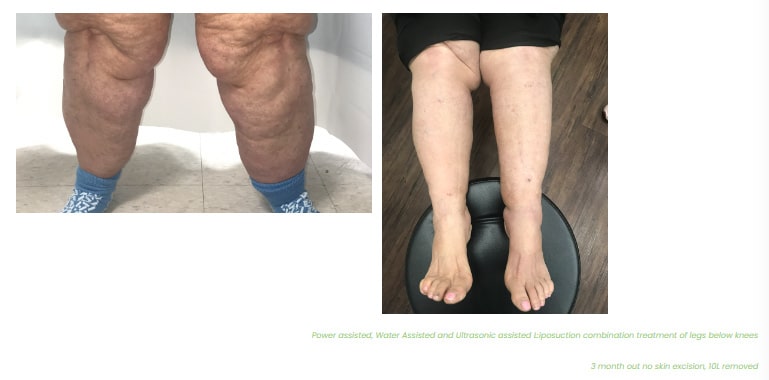
Power assisted, Water Assisted and Ultrasonic assisted L:iposuction combination treatment of legs below knees
3 month out no skin excision, 10L removed
Common Symptoms of Lipedema
Symptoms typically include:
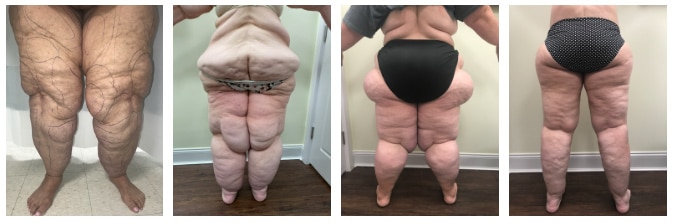
- Symmetric fat accumulation in the hips, thighs, legs, and sometimes arms
- Sparing of the feet and hands (resulting in a “cuffing” appearance at the ankles or wrists)
- Easy bruising and skin sensitivity
- Cold skin or pain when touched
- A “nodular” or “grainy” texture to the fat, often compared to rice, peas, or jelly under the skin
- Progressive pain, heaviness, and fatigue
- Reduced mobility and difficulty exercising
- Psychological distress, poor body image, and social stigma
Many patients also report difficulty with daily activities, including walking, sitting comfortably, driving, or traveling due to swelling and discomfort. The psychological burden can be significant, with some individuals avoiding public events, swimming, or wearing fitted clothing due to embarrassment or pain.
Causes and Contributing Factors
While the exact cause of lipedema remains unknown, it is believed to be a combination of genetic and hormonal influences. First described by Allen and Hines in 1940, lipedema has since been called by many names, including:
- Painful Fat Syndrome
- Riding Breeches Syndrome
- Stovepipe Legs
- Lipalgia
- Adiposalgia
Lipedema is not just a fat disorder. Many patients also have abnormalities in lymphatic function. Instead of draining lymph fluid efficiently, lipedema-affected lymphatic vessels may become enlarged, loose, leaky, or form “lakes” where fluid accumulates. This contributes to chronic swelling and inflammation within the fatty tissue.
As waste products build up in the legs, the overwhelmed lymphatic system often fails to compensate, and the venous system begins to show signs of insufficiency. This leads to a cycle of increased fat accumulation, lymphatic stagnation, and worsening tissue damage.
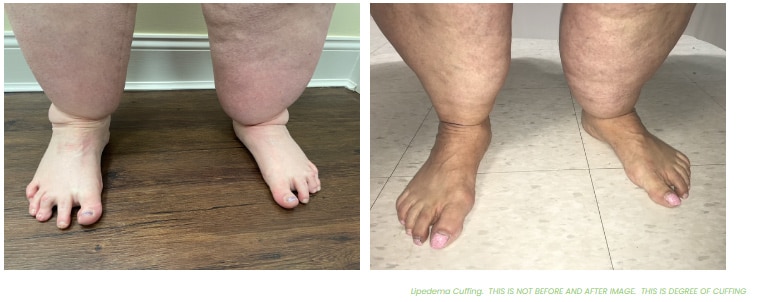
Lipedema Cuffing. THIS IS NOT A BEFORE AND AFTER IMAGE. THIS IS THE DEGREE OF CUFFING.
There is a social stigma associated with having a large lower part of the body, where laypeople may associate lipedema patients with laziness, uncontrolled eating habits, etc.
Stages of Lipedema
Lipedema progresses over time and is generally categorized into four stages:
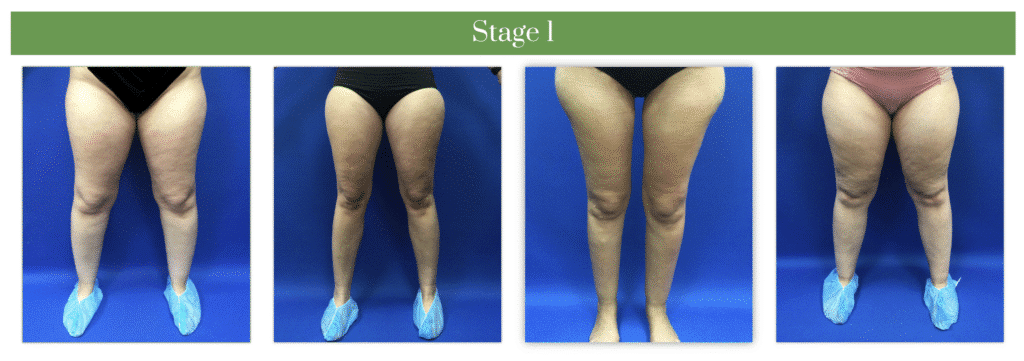
Stage 1:
- Smooth skin surface
- Fat feels soft and spongy
- May show mild swelling or discomfort
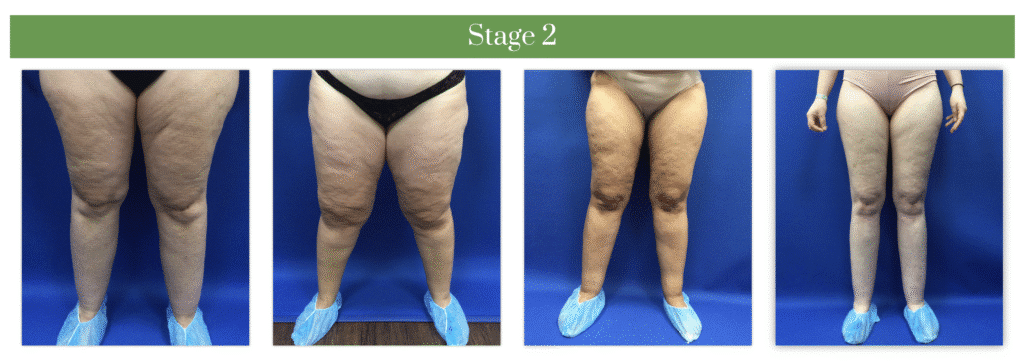
Stage 2:
- Uneven, dimpled skin (similar to cellulite)
- Development of small nodules under the skin
- Increased pain, bruising, and skin sensitivity
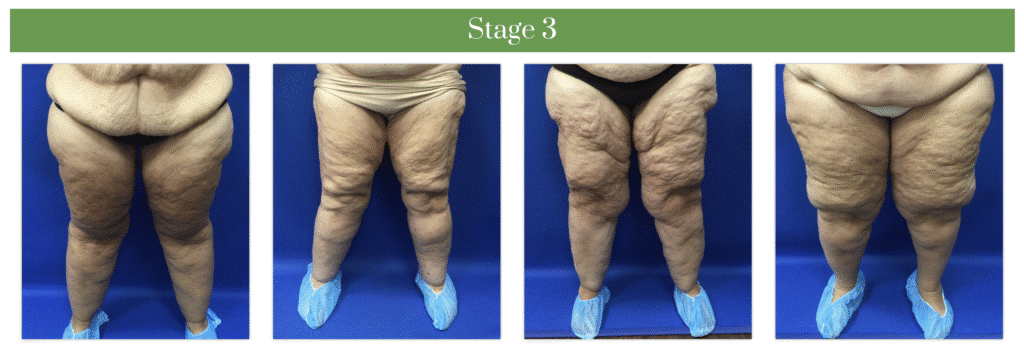
Stage 3:
- Large overhangs of skin and fat, particularly around the thighs and knees
- Lumps of hardened fatty tissue
- More severe mobility limitations
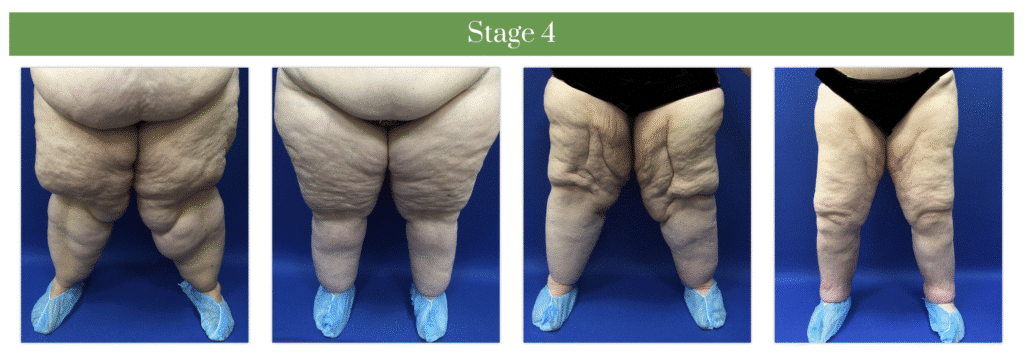
Stage 4 (Lipo-lymphedema):
- Coexisting lipedema and lymphedema
- Significant swelling
- Skin changes such as thickening, discoloration, or infections
Recognizing the stage of lipedema is crucial for planning appropriate treatment, especially surgical intervention.
Diagnosis
Lipedema is primarily diagnosed through clinical evaluation and patient history. Key diagnostic criteria include:
- Female patient with symmetrical fat accumulation in the lower body
- Minimal or no involvement of the feet
- Pain, tenderness, and easy bruising in the affected areas
- Little or no pitting edema (except in late-stage cases)
Diagnostic tools such as vascular ultrasound, MRI, or lymphoscintigraphy may be used to assess lymphatic and venous function. Dr. Volshteyn often recommends a comprehensive vascular ultrasound to evaluate both lymphatic and venous health before developing a treatment plan.
Treatment of Lipedema
Conservative management may include:
- Nutritional support and anti-inflammatory diets
- Manual lymphatic drainage (MLD)
- Compression therapy
- Custom compression garments
- Mechanical devices like Lymphapress
- Emotional and psychological support
However, conservative treatments typically provide only temporary or modest symptom relief.
Organize Your Medical History and Symptoms
Write down key details to share with your provider:
- When did you first notice signs of lipedema?
- When did your symptoms worsen?
- What makes your symptoms better or worse?
- Have you tried treatments such as diet, exercise, compression wraps, lymphatic pumps, massage therapy, or medical garments?
- Have you been seen by a vein specialist?
- Have you had a bariatric evaluation (if relevant)?
Surgical Options
Surgical intervention offers more durable improvement and may include:
- Power-Assisted Liposuction (PAL): Removes bulk fat while reducing trauma to surrounding tissues
- Water-Assisted Liposuction (WAL): Preserves lymphatic structures and allows gentle fat removal
- Ultrasound-Assisted Liposuction (UAL or VASER): Promotes skin tightening and enhances fat breakdown
- Skin Excision Procedures: May be needed in cases of extreme tissue overhang
- Manual Nodule Removal: For patients with painful, hardened nodules
Dr. Volshteyn often combines these techniques based on the patient’s severity and goals. In many cases, large volumes of fat—10 liters or more—are removed to improve comfort, mobility, and quality of life. While skin excision may be needed in some cases, use of VASER liposuction often results in significant skin tightening over time, especially in younger patients or those with good skin elasticity.
Insurance Coverage
Many private plans do cover lipedema surgery based on the latest scientific studies. Aetna, Cigna, Blue Cross, and others provide coverage for liposuction and excision surgery based on their internal policies. The process of authorization is time-consuming and requires reports from the primary doctor or endocrinologist and possibly a functional capacity evaluation. Despite that, our office had been successful in getting many of them approved.
Why Choose Lipedema MD for Lipedema?
Lipedema MD offers one of the most experienced surgical teams in the region for lipedema care. Dr. Boris Volshteyn is a board-certified plastic surgeon with advanced training in lymphatic surgery, microsurgery, and multiple forms of liposuction. His expertise includes ultrasonic-assisted liposuction, power-assisted liposuction, and water-assisted techniques to protect lymphatic function while reducing painful fat. With decades of experience and global training, Dr. Volshteyn has helped countless patients regain their comfort and mobility.
Dr. Thompson, a double board-certified plastic surgeon, brings a wealth of knowledge in complex cosmetic and reconstructive procedures. Known for his thoughtful approach and deep surgical expertise, he has performed advanced surgeries throughout Monmouth County. He is also a trusted speaker and educator in the field of breast and body contouring surgery.
Together, Dr. Volshteyn and Dr. Thompson provide individualized, evidence-based care that respects your experience and supports your long-term health. With hospital privileges at top local facilities and access to advanced imaging and surgical technologies, they’re equipped to manage even the most severe cases of lipedema.
Helpful Links
- Lipedema Foundation
- Fat Disorders Resource Society
- LipoedemaUK
- American Board of Venous and Lymphatic Medicine
Take the First Step Toward Relief
You don’t have to live in discomfort or confusion. At Lipedema MD in West Long Branch, NJ, we understand how complex lipedema can be, and we’re here to help. Call (732) 641-3350 to contact us and learn how we can support you with expert, compassionate care.
 Get Directions